Staying fit doesn't require a gym membership or fancy equipment. With just your bodyweight, you can perform highly effective exercises to build strength, improve flexibility, and boost overall fitness—all from the comfort of your home. Here’s a guide to five essential bodyweight exercises to help you stay healthy and active anytime, anywhere.
1. Push-Ups: The Foundation of Upper Body Strength
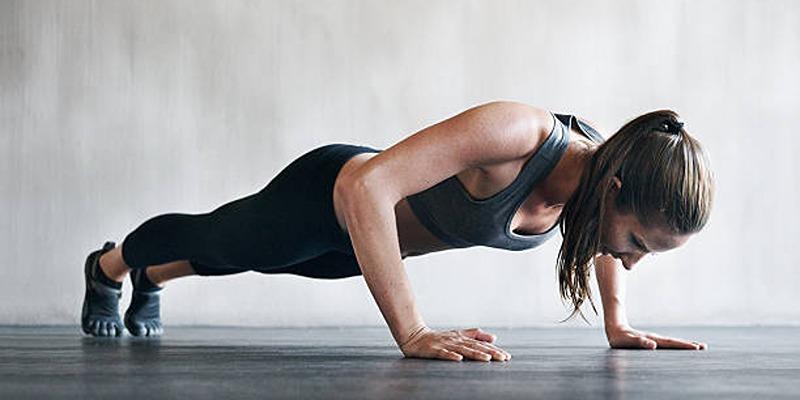
Push-ups are a cornerstone of bodyweight training and remain one of the most reliable exercises for building functional upper-body strength. What sets push-ups apart is their ability to simultaneously engage multiple muscle groups—including the pectorals (chest muscles), deltoids (shoulders), triceps, and the core musculature—in a coordinated movement.
How to Do It Correctly?
Mastering proper form is essential to gain the maximum benefit and avoid strain or injury. Here's a step-by-step guide:
- Starting Position:
- Begin in a high plank position with your hands slightly wider than shoulder-width apart.
- Your feet should be together, and your toes grounded.
- Engage your core muscles and ensure your body forms a straight line from head to heels.
- Lowering Phase:
- Inhale as you slowly lower your chest toward the floor by bending your elbows.
- Keep elbows at a 45-degree angle from your body (not flared out or too close).
- Maintain a neutral neck position by gazing slightly ahead of you, not down.
- Pressing Phase:
- Exhale as you push through your palms and straighten your elbows to return to the starting position.
- Avoid letting your hips sag or raising them too high—your spine should remain neutral.
Pro Tips for Maximum Efficiency:
- For Beginners: Start with incline push-ups using a stable surface like a wall, bench, or sturdy table to reduce the load on your upper body while still learning correct form.
- For Intermediate Level: Perform standard push-ups and incorporate a slow tempo—such as lowering over 3 seconds and pushing up in 1 second—for increased time under tension.
- For Advanced Fitness Levels: Try decline push-ups by elevating your feet on a step or platform to increase resistance.
Common Mistakes to Avoid:
- Sagging hips: This reduces core engagement and places pressure on the lower back. Keep your core tight throughout.
- Flaring elbows too wide: This can strain the shoulders. Aim for about a 45-degree angle.
- Partial range of motion: Lower your chest close to the floor for full muscle activation. Half reps lead to half results.
Recommended Reps and Sets:
- Beginners: 3 sets of 8–10 repetitions with rest in between.
- Intermediate: 3 sets of 10–15 repetitions, or until you begin to fatigue with good form.
- Advanced: 4–5 sets of 15–20 repetitions, incorporating variations to challenge different muscles.
Why You Should Include Push-Ups in Your Routine?
Push-ups don’t just build muscular strength—they improve functional fitness, allowing you to perform daily tasks more efficiently, such as lifting, pushing, or stabilizing your body. They're also a fantastic way to activate the cardiovascular system when performed in higher volumes or at faster paces, promoting both strength and conditioning.
2. Bodyweight Squats: Build Stronger Legs and Glutes
Squats engage multiple muscle groups at once—including the quadriceps, hamstrings, glutes, and even the core. They are perfect for developing lower body strength, improving mobility, and increasing balance.
How to Do It:
- Plant your feet shoulder-width apart, with your toes slightly turned out—get ready to move!
- Lower your hips down and back as if sitting in an invisible chair.
- Keep your back straight, chest lifted, and knees tracking over your toes.
- Drive through your heels and power back up to a strong, confident stand!
Pro Tips:
- Keep your weight on your heels, not your toes.
- Pause at the bottom for a second to increase muscle engagement.
Reps: Perform 3 sets of 12–20 repetitions.
3. Plank: Core Stability and Posture Control
Planks are powerful for core strengthening. They engage the abdominal muscles, lower back, shoulders, and even the legs to maintain a steady position, enhancing overall posture and stability.
How to Do It:
- Begin in a forearm plank position with elbows under shoulders.
- Keep your body straight and your core tight.
- Hold this position, making sure your hips don’t sag or lift too high.
Pro Tips:
- Start with short holds (20–30 seconds) and gradually increase.
- Breathe deeply throughout the exercise—don’t hold your breath.
Variations: Side planks and plank shoulder taps are great variations to add diversity and increase difficulty.
Duration: Hold for 30–60 seconds, 3 times.
4. Glute Bridges: Strengthen the Posterior Chain
Glute bridges are an excellent exercise for engaging the glutes, hamstrings, and lower back. They are particularly effective for enhancing hip stability and combating the negative effects of extended periods of sitting.
How to Perform:
- Let your arms relax at your sides, palms down, and get ready to feel the difference!
- Push through your heels and lift your hips toward the ceiling, forming a powerful straight line from your shoulders to your knees. Feel the energy as you rise!
- Engage and squeeze your glutes at the top before slowly lowering your hips back to the starting position.
Pro Tips:
- Avoid overextending your back—focus on squeezing the glutes.
- To increase intensity, perform single-leg bridges.
Reps: Complete 3 sets of 15–20 repetitions.
5. Mountain Climbers: Full-Body Cardio and Core Workout
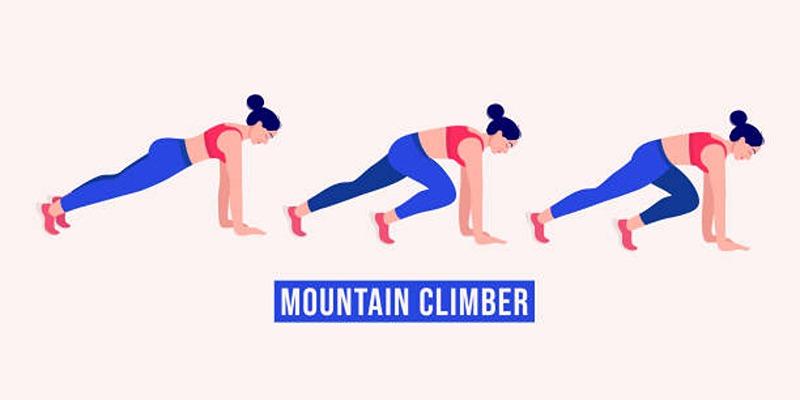
Mountain climbers combine cardio and core work in one powerful movement. They raise your heart rate while strengthening the shoulders, arms, chest, and abdominal muscles.
How to Do It:
- Begin in a high plank position.
- Pull one knee up to your chest while keeping the other leg stretched out—feel that stretch and keep it going!
- Quickly switch legs in a running motion without letting your hips bounce.
Pro Tips:
- Maintain a steady rhythm to keep the form consistent.
- Focus on engaging the core and not just rushing through the motion.
Reps: Perform for 30–45 seconds, repeat for 3 rounds.
How to Get the Most Out of Your At-Home Workouts?
- Focus on Form Over Speed: Always prioritize proper technique. Rushing through exercises can lead to strain or improper muscle engagement.
- Create a Consistent Routine: Set aside 20–30 minutes daily or every other day. Consistency is key to seeing results.
- Incorporate Rest and Recovery: Rest days allow your muscles to repair and grow. Don’t skip recovery—it’s essential for long-term progress.
- Stay Hydrated and Eat Balanced Meals: Support your workouts with proper hydration and nutrition. Balanced meals aid in muscle recovery and overall energy.
Sample Weekly Bodyweight Workout Plan:
Day | Focus | Exercises |
Monday | Upper Body & Core | Push-ups, Plank, Mountain Climbers |
Tuesday | Lower Body | Bodyweight Squats, Glute Bridges |
Wednesday | Rest or Light Stretching | Gentle yoga or walking |
Thursday | Full Body | Combine all 5 exercises |
Friday | Core & Stability | Planks (standard and side), Glute Bridges |
Saturday | Cardio Blast | Mountain Climbers, Jumping Jacks, High Knees |
Sunday | Rest | Recovery & hydration |
Conclusion:
Bodyweight exercises are a reliable and accessible way to enhance your fitness journey. Whether you're looking to build strength, increase endurance, or simply stay active, these five exercises offer a complete solution, without the need for special equipment or facilities. All you need is commitment and space the size of a yoga mat to get started. By focusing on proper form and maintaining a regular schedule, you can achieve noticeable fitness results in the comfort of your own home.